


Worldwide Travel Adapters
World travel adapter plugs attempt to solve the problems faced by frequent travelers by providing a solution to convert any plug into something that will fit almost any electrical outlet worldwide - providing a truly international plug adapter in a single, compact unit. Whilst some companies make 'world travel adapter kits' they are really nothing more than a collection of individual plug adapters - bulky and it's easy to lose the component parts.


A true worldwide adapter has the advantage of being a single, compact unit that has selectable pins that are configured to fit the most commonly found outlets around the world. The selection is usually made using a slider which pushes out the desired pins from the body of the adapter. An added advantage is that these adapters will also accept multiple plug types so they truly approach an 'any plug to any outlet' solution.
Recommended Universal Adapters
Budget 2 Pack

Onboard USB/C + PD35W

High Power (3000W)

Grounded with USB/C + PD35W

Onboard 140W GaN USB C

Whole World Solution

100W GaN USB Charger
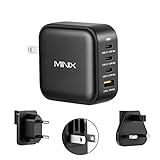
Power Strip + USB/C/PD 65W

Integrated Voltage Converter

Integrated Transformer

How do International Adapters Work?
Watch a Tessan world adapter in action.
What is the Best Global Adapter Plug?
This ultimately depends upon your needs but in choosing you should consider the following important points:
- Is USB / USB-C connectivity required?
- Do you need a PD (Power Delivery) port for charging a laptop?
- Do you need to operate grounded appliances?
- Do you need to operate high power appliances (eg a hair dryer)?
- Connectivity - does it cover all the countries that you will be travelling to?
If you want the best world adapter all in one check out our top picks. There are some excellent products out there whether you want a budget version, need onboard USB, prefer a good all rounder, need a grounded adapter or have a high power requirement we've got you covered.
Worldwide Travel Adapters with USB Connectivity
Many worldwide adapters now have multiple, integral USB and USB-C ports which enables you to charge a wide range of compatible electronic hand-held devices such as cell phones, tablets, MP3 players, GPS, game consoles and bluetooth accessories such as headsets and headphones.
If this kind of functionality is important to you make sure that the model you choose includes the ports that you need. Sometimes the USB charging module is a separate unit that plugs into the adapter itself so you will not be able to charge USB devices and use the adapter to plug in your other appliances at the same time, which can be inconvenient. Most adapters have now moved to integrated USB ports, which we think is preferable. The trend is towards more and faster USB ports with USB-C now appearing on most high end models and some of the budget ones too.

If you need to power a laptop then it's important to check that a PD (Power Delivery) port is included. These ports deliver the higher power (35W plus) that is required for charging modern laptops. You will need to check your laptop's power requirements as the amount of power that can be delivered must be matched or it will not work. Increasing power capabilities will necessarily be reflected in both increased price and weight / size. The most powerful adapters now have integrated GaN technology with outputs up to 140W.
There have been reports that some of the heavier international electrical adapters can struggle with limited levels of outlet grip and have a tendancy to pull out. The US type A outlets (2 flat blades) are particularly prone to this. Choosing the right adapter can be a balancing act that is full of compromises.
Grounded vs Ungrounded World Adapters
The UK is different to many countries in that all outlets are grounded and all plugs have a ground pin (even though it is not always used and can be plastic). Many countries have a mixture of 2 pin (ungrounded) and 3 pin (grounded) outlets and this complicates the use of plug adapters.
In general most travel appliances will not need a ground connection as it is mostly larger / more power hungry appliances that need grounding. The majority of travel adapters (both worldwide and country specific) are ungrounded, only connecting to the outlet with 2 pins. If you need to connect a grounded appliance then you will need a grounded 3 pin adapter that is specifically designed to be used with grounded equipment.
How do you tell if an appliance needs grounding? Unfortunately it's not so simple because these days many appliances are fitted with a 3 pin plug as standard (irrespective of whether they need it or not). If the ground pin is plastic then the appliance does not need to be grounded. Another way to tell is by looking at the manufacturer's label (which may be on the power supply) or manual. Appliances that are double insulated will have a symbol that looks like a box inside a box and these will not need grounding. For critical equipment, such as medical appliances it may be worth contacting the manufacturer if there is any uncertainty.

A word of warning - If you purchase a 3 pin (grounded) adapter it will generally only be able to connect to grounded outlets because the plug will not push in unless the outlet has a corresponding hole to accept the 3rd pin. The European Schuko plug is an exception to this as it uses two side clips as opposed to a pin for grounding. Whilst most countries have fitted only grounded outlets as standard for many years now there are still a lot of the older, 2 pin outlets in many countries including the US and Europe. You may find that you need one adapter for your grounded appliances and a separate one for ungrounded ones.
To make matters more complicated an increasing number of modern outlets have shutters fitted to the live and neutral slots. This is a safety measure to ensure that children can't poke paper clips and the like into the outlet and electrocute themselves. The downside is that the shutters are usually opened by the ground pin (which is longer) as you push the plug in. This means that you may not be able to use ungrounded adapters in this type of outlet even if your equipment doesn't need grounding.
Power Requirements
Cheaper international adapters tend to be rated at 2.5 A or lower, better ones may be capable of operating at up to 10 A or more. If you have higher powered appliances such as a hair dryer or travel iron you may need to select a high power adapter. You may also need to account for the fact that a dual voltage appliance will draw roughly double the current on a 120V supply than on a 240V one.
Connectivity
The most obvious thing is to check that any worldwide plug adapter that you buy is compatible with the outlets in the countries that you will be visiting. In general most global adapters can connect to outlets of the following types:
- Type A / B - USA, Canada, Central America, Japan
- Type C / E / F - Europe, Tunisia and Morocco
- Type G - UK, Ireland, Cyprus, Malta, Malaysia, Singapore and Hong Kong
- Type I - Australia, China, New Zealand, Papua New Guinea and Argentina
Some adapters also cover:
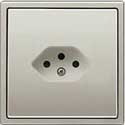
- Type J - Switzerland
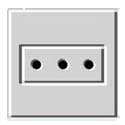
- Type L - Italy
Most universal adapters do not specifically cover:
- Type D - India, Sri Lanka, Nepal and Namibia
- Type H - Israel
- Type K - Denmark
- Type M - South Africa
- Type N - Brazil
- Type O - Thailand
Ungrounded worldwide adapters can however be used in all but the South African type M outlets. Most country's outlets will generally accept type A, C or I plugs. For instance outlets in India, Israel, Switzerland, Denmark, Italy, Brazil and Thailand will all accept a type C (European ungrounded) plug. Even in South Africa the type N outlet has been the standard one fitted since 2018 so a universal adapter should get you connected almost everywhere.
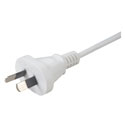
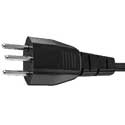
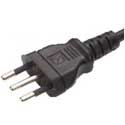
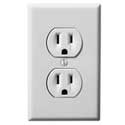
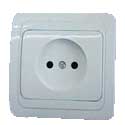
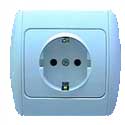
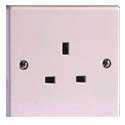
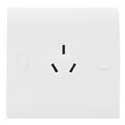
The best universal travel adapters that we have seen will allow you to connect all of the following plugs to any of the outlets:
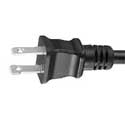
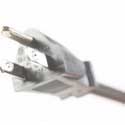
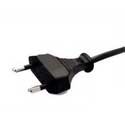
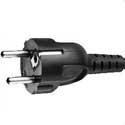
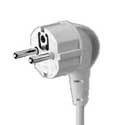
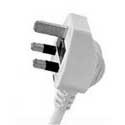
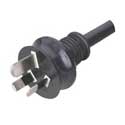
Output Suitable for These Outlets
Frequently Asked Questions
About Worldwide Travel Adapters
-
What is an international travel adapter?
-
International plug adapters combine multiple, user selectable plugs into a single compact unit. The objective is to provide frequent travelers with the ability to plug any electrical device into almost any outlet in the world without the need to pack multiple adapters. They have become more sophisticated as they have gained in popularity with many now sporting integrated USB, USB-C and PD charging ports providing a true all in one solution.
-
How does a worldwide travel adapter work?
-
Essentially it converts the shape of your plug to fit the different outlets found in other countries around the globe. The plug type is generally selectable between US, Australian, European and UK. They also have a universal socket which will accept most international plugs.
-
How do you use a worldwide travel adapter?
-
Most worldwide adapters have sliders to select between international plug types. Simply select the required type (US, EU, UK, AU), plug the adapter into the wall outlet and plug your device into the adapter's universal input socket. Watch the how to video on this page to see one in action.
-
Can a worldwide adapter be used in Europe?
-
Yes, almost all countries in Europe can accept the type C (ungrounded) plug that is incorporated. Type G (grounded) plugs are also included which covers the UK. If you need to use grounded appliances you will need a grounded worldwide adapter, which are not common, and Switzerland, Denmark and Italy would require country specific adapters.
-
Can you get a worldwide adapter plug with USB ports?
-
Yes, many now come with multiple USB, USB-C and sometimes high powered PD ports for charging laptops
-
Where can I buy an international travel adapter in the USA?
-
Our top picks cover a range of international adapters to suit all needs and budgets and they are all available in the USA.
-
What's the best universal travel adapter available in the USA?
-
The best universal adapter depends to some extent on your specific needs but we have top USA picks in categories like Budget, Onboard USB/C, High power (for hair dryers), PD (for charging laptops), grounded and Integral Transformers.
-
Can a worldwide travel adapter be used to charge my phone?
-
Yes, you just need to pick one that has onboard USB or USB-C and use your normal charging cable. USB charging ports usually work with input voltages of 100V - 250V so no voltage converter is required specifically for charging your phone.
-
Can I use a worldwide plug adapter for laptops?
-
Yes, you just need to pick one that has an onboard USB PD (Power Delivery) with a power output that is matched to your laptop's requirement and an appropriate charging cable. USB charging ports usually work with input voltages of 100V - 250V so no voltage converter is required specifically for charging your laptop. Alternatively you can plug your laptop's normal power supply directly into the plug adapter and power it that way.
-
Are universal plug adapters safe?
-
Yes, most universal plug adapters are safe if used correctly. It is important never to use an appliance that draws more current than the adapter is rated for, some models have an integral fuse for extra security. Many of the high quality adapters are RoHS / UL / FCC certified for peace of mind. Avoid cheap, unbranded imports.
Voltage Considerations
Please be aware that whilst a worldwide travel adapter will allow you to physically plug your devices into a different outlet it will not change the voltage or frequency of the supply. If the supply voltage is different in the countries that you will be visiting you will have to check any appliances that you wish to use carefully to see what voltage / frequency is specified.
In general travel appliances and items such as laptops will often specify "100 - 240V 50/60 Hz" either on the equipment or the power supply (if it has one). If not then you may need a transformer to operate your appliance. It is worth noting that trying to operate a 230V device on 120V usually results in reduced performance but is generally not dangerous (but it may damage the device!). On the contrary operating devices designed for 120V on 230V is highly dangerous and may result in fire, serious injury and irrepairable damage to the device.
Frequency Considerations
A transformer or voltage converter may solve a voltage difference but will not alter the different frequency of the supply. Some countries use 50 Hz, others 60 Hz. In practical terms this makes little difference as most travel appliances will run at either frequency. Some items with motors, such as hair dryers and some clocks will run a little faster or slower than intended but it is not likely to be problematic. Check your device - it may say 50/60 Hz which indicates that it is compatible with either frequency. If you are in doubt or have critical / expensive equipment check with the manufacturer first as some equipment may be damaged by running on an incorrect frequency.